About Bucharest
Welcome to the Little Paris!
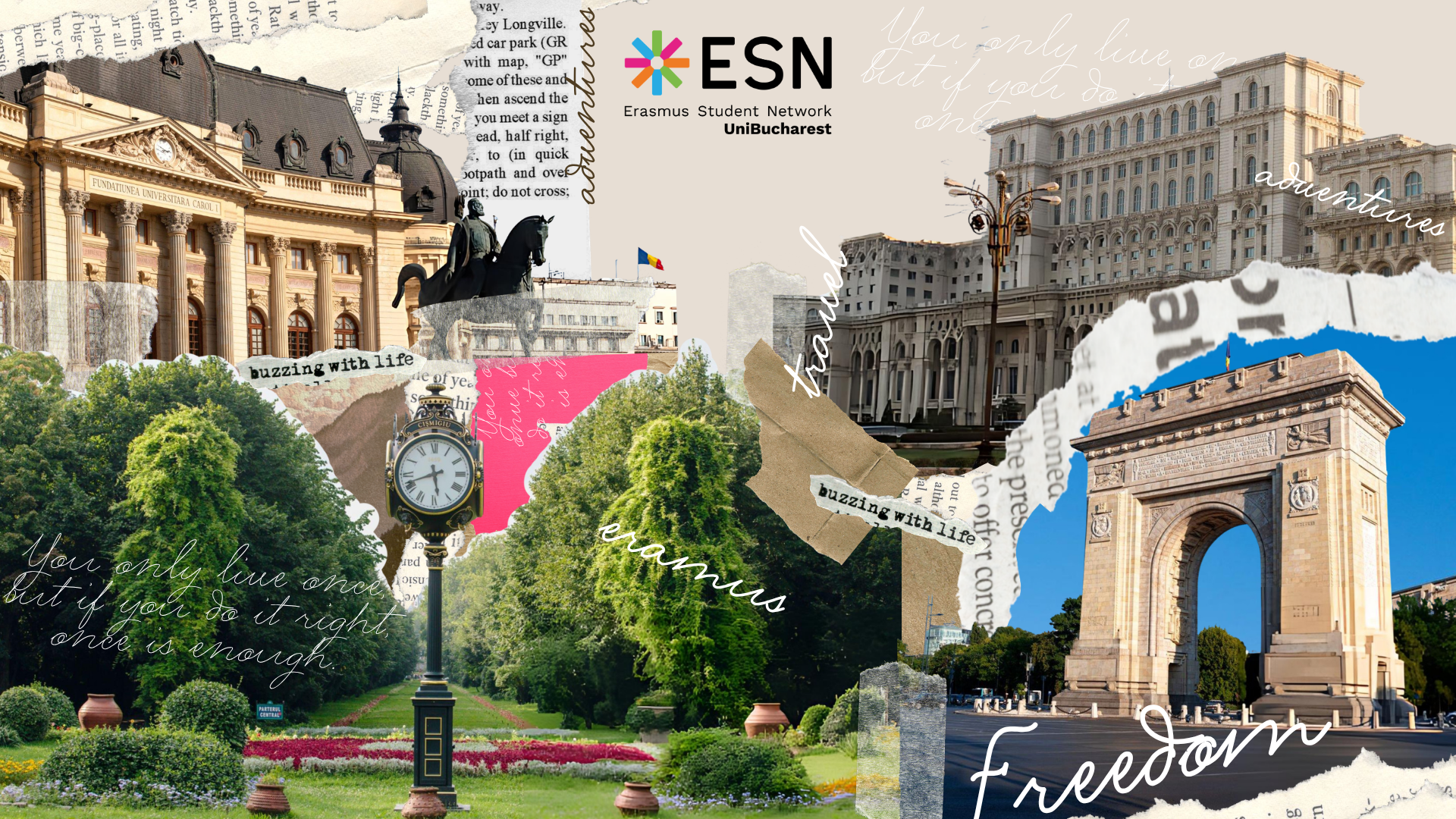
Title
You've landed in Bucharest...now what?
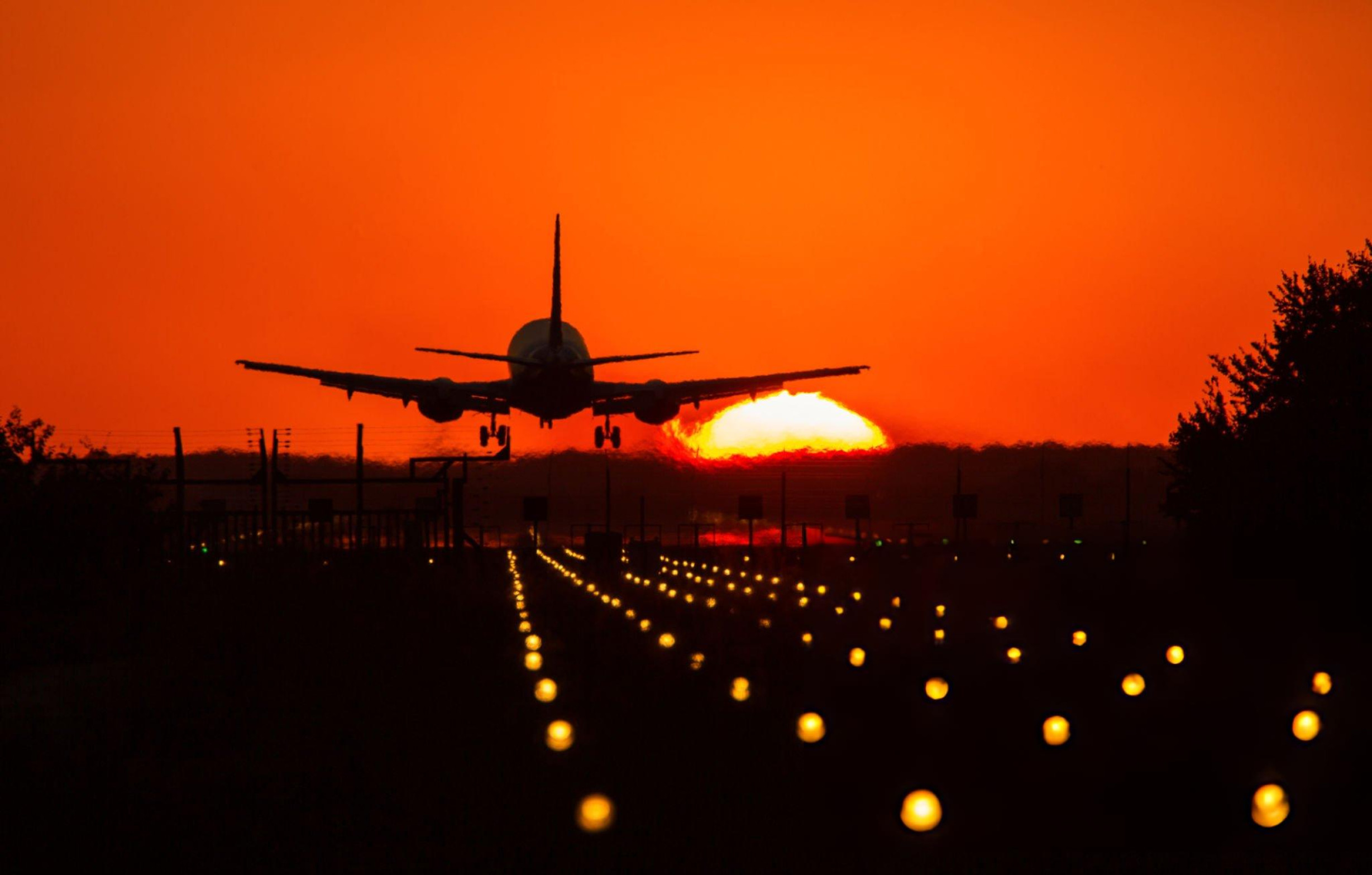
Welcome to Bucharest – your new home for your Erasmus adventure!
Located in the South-Eastern part of Europe, Bucharest is the vibrant and lively capital of Romania, home to around 2.5 million people, where history and modernity blend in their own unique way. As you start exploring, you will quickly notice its wide, tree-lined boulevards and the elegant Belle Époque architecture that earned it the nickname ”Little Paris”, giving it its particular charm and bringing a piece of Western Europe all the way across the continent, for locals and tourists alike to enjoy.
With roots dating back to the Middle Ages, as mentioned in an official document in 1459 by the infamous ruler of Wallachia, Vlad Țepeș, Bucharest has grown into a dynamic and welcoming place, perfect for discovering a blend of cultures, people, and places unique to Europe, and for making unforgettable memories.
Title
Going back in time...
The stepping stone for many memorable and illustrious characters, buildings, or places is a good story – care to know where Bucharest/București got its name? Read on to learn about the city's mythical founder, the shepherd Bucur (to feel joy in Romanian)

According to the legend, a long, long time ago, while the Mongols were sweeping across the land and pouring through the meadows and forests of Dâmbovița, where Bucharest now lies, a shepherd and his flock of sheep were roaming the fields. This shepherd's name was Bucur.
As the story has it, the Mongols often stole sheep, lambs, and donkeys from Bucur's flock, setting fire to his sheepfolds, and taking his companions captive, but their evil knew no bounds – they had also kidnapped Bucur's daughter, Anca! Pained and angered by this discovery, the shepherd quickly followed behind the abductors, for days and nights on end, until they reached the Dniester, now the border between the Republic of Moldova and Ukraine. In an attempt to flee their pursuers, the Mongols tried to cross the river with their horses but failed, and Anca managed to break free.
Returning to the brink of the river Dâmbovița, the family decided to build a sturdy house surrounded by a high fence. After Anca got married and Bucur's family expanded, they also decided to build a church, which is still standing to this day, the Church of Bucur. Through the years, more and more people gathered here, so after hundreds and hundreds of years, a city was formed around Bucur's house, which people called București, now the beautiful capital of Romania.
Title
Bucarest, mon amour
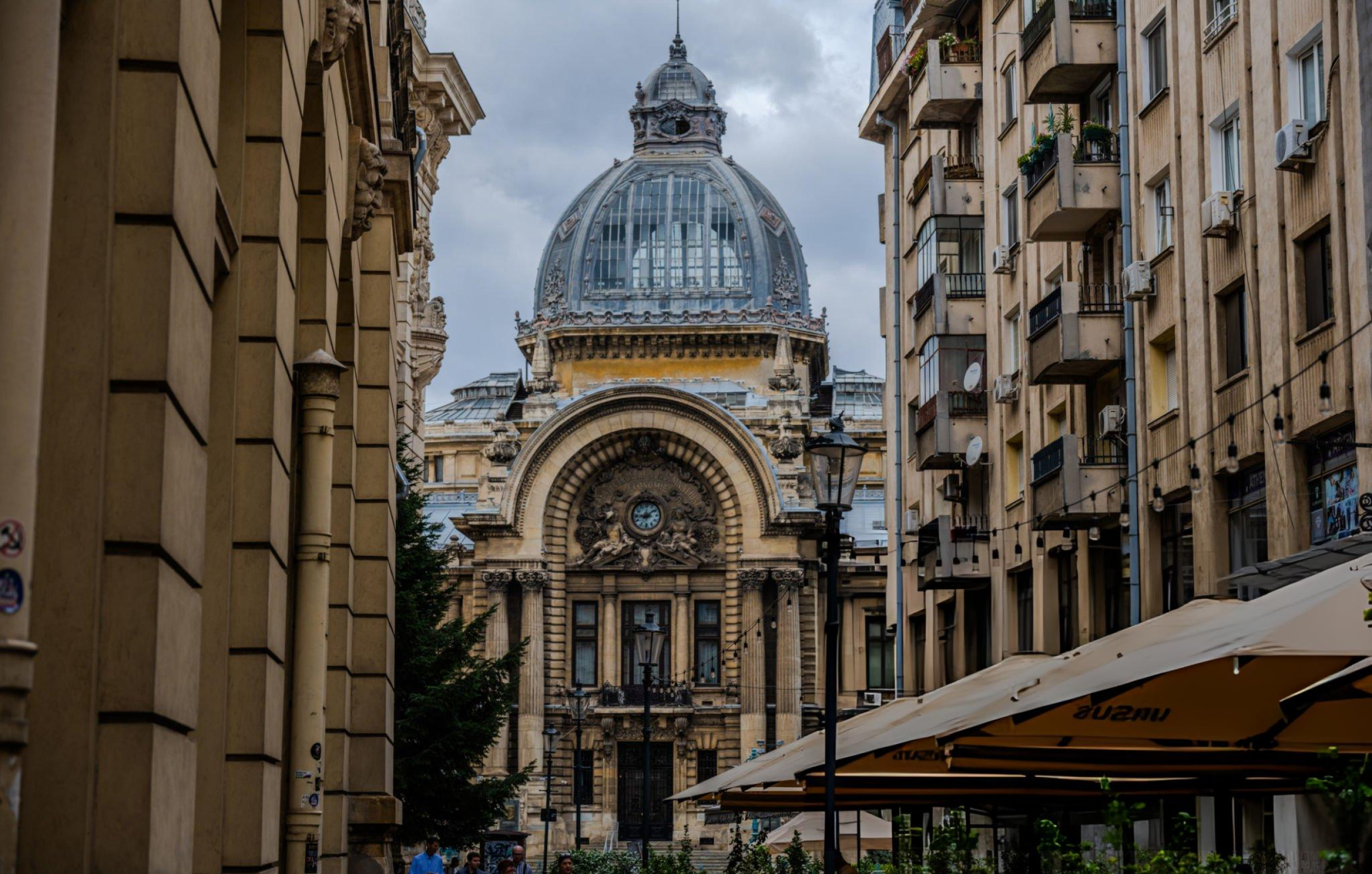
Across the centuries, Bucharest has undergone remarkable transformations, so let's step back into the 19th century – find out how ambition, elegance, and a powerful fascination with France shaped the city of that era.
Starting with the mid-1800s, Bucharest became a hub of French influence, determined by the Romanian youth who travelled to Paris to study, returning home inspired and determined to reshape their own society. As such, with the support of local aristocracy, they introduced a refined, French-style of living that gradually replaced many of the older Eastern traditions. This shift could be seen everywhere – from people's manners and fashion to the city's architecture, the French culture and language seeped deep into the fabric of Romanian society.
The result? A city that began to mirror the charm of Paris. Today, echoes of that golden age still linger, especially in the Old Town, where you'll spot the legacy reflected in richly decorated facades, through delicately framed windows, and shading grand entrances. These architectural gems, many dating from the late 19th and early 20th centuries, continue to tell the story of a time when Bucharest dreamed, and briefly lived, like Paris.
Title
The fall of „Little Paris”
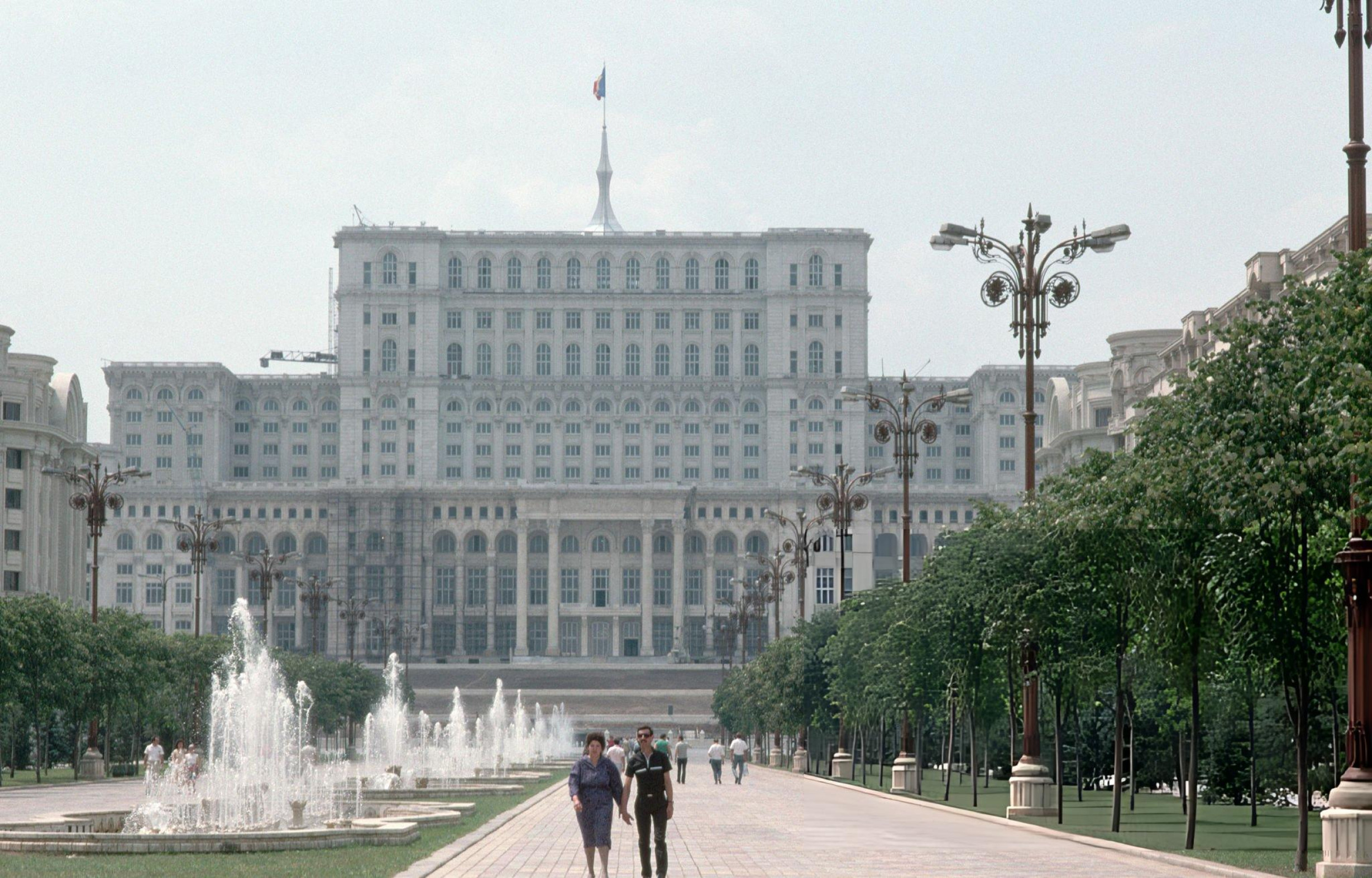
The elegance of the „Little Paris” era did not last forever. In the mid-20th century, the city entered a period of profound decline under the Communist regime, when ideology and uniformity replaced refinement and individuality.
During this time, much of Bucharest's architectural and cultural identity was reshaped to adhere to communist ideals, with historic neighborhoods being neglected or demolished, just to be replaced by standardized apartment blocks and imposing public buildings, most of which are still visible today. The delicate Belle Époque charm faded as practicality and control became the defining principles of urban life.
These transformations were accelerated by tragedy. In 1977, a devastating earthquake in the Vrancea region struck Romania, severely damaging large parts of Bucharest. Many historic buildings collapsed or were left beyond repair, to be lost to time under the negligence of the communist regime, with local authorities choosing to clear entire areas to make way for the new socialist vision of the capital.
Under the rule of Nicolae Ceaușescu, this process intensified, with entire districts being erased in large-scale systematization projects, displacing communities and permanently altering the city's historic fabric – the most infamous example being the Uranus neighborhood, which was razed to make room for the Palace of Parliament.
Even through this period of loss, the city endured. Beneath the layers of concrete and history, fragments of its former elegance survived, as postcards of a past that still shapes Bucharest's identity today.
Title
Bucharest's beating heart
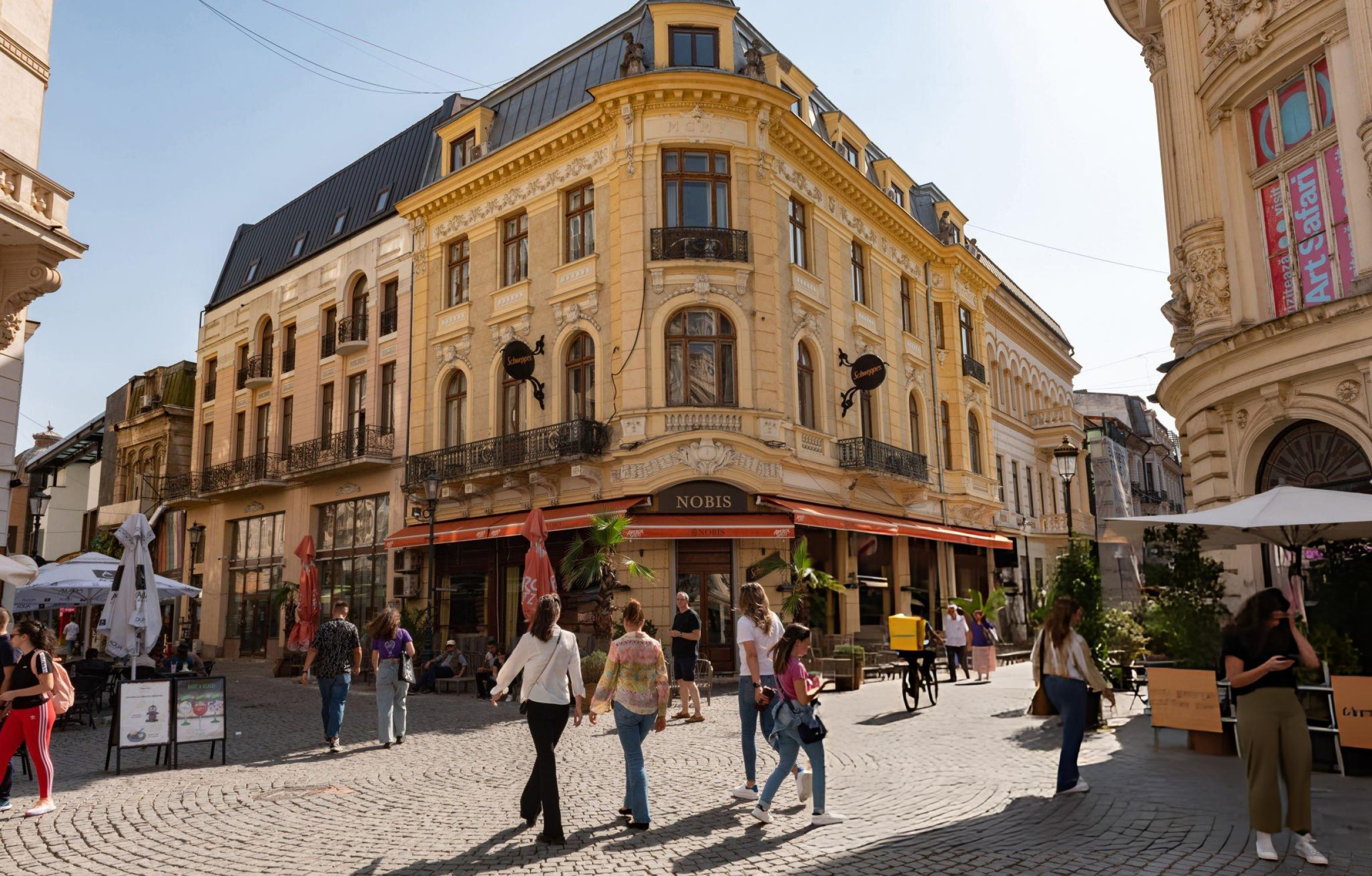
But Bucharest isn't just about its past – it's a city full of light, energy, and life. The Old Town, the beating heart of the city, is famous for its lively atmosphere, packed with cafés, bars, and clubs. With its cobblestone streets, colorful buildings, and buzzing terraces, this area has become the city’s main social hub, especially after sunset.
And what else to support the city's beating heart if not the students?
Just a short walk away is the University of Bucharest, only one of the 36 universities currently operating in Bucharest, and one of the most important student hubs in the city. The surrounding area is full of student-friendly spaces – libraries, parks, and affordable eateries – creating a dynamic environment where learning and social life naturally blend together.
For Erasmus students, Bucharest offers more than just a place to study. It’s a city where lectures can turn into late-night conversations, and where every street in the Old Town feels like an invitation to explore, connect, and make the most of your experience. So what are you waiting for? Enjoy every moment — this city has a lot to offer, and your adventure is just beginning!